
One detail separates a great textured Italian bob from an ordinary layered bob: the ends still need substance. Too much layering can remove the dense, luxurious shape that gives this cut its character. Instead, texture works best when it creates movement through selected sections while preserving a strong perimeter. For women over 50, that leaves plenty of ways to personalize the look. Soft waves, side bangs, natural silver, curls, or subtle layers can completely change the finish. These 15 ideas keep the signature Italian bob shape while adding relaxed, modern texture.
Classic Textured Italian Bob
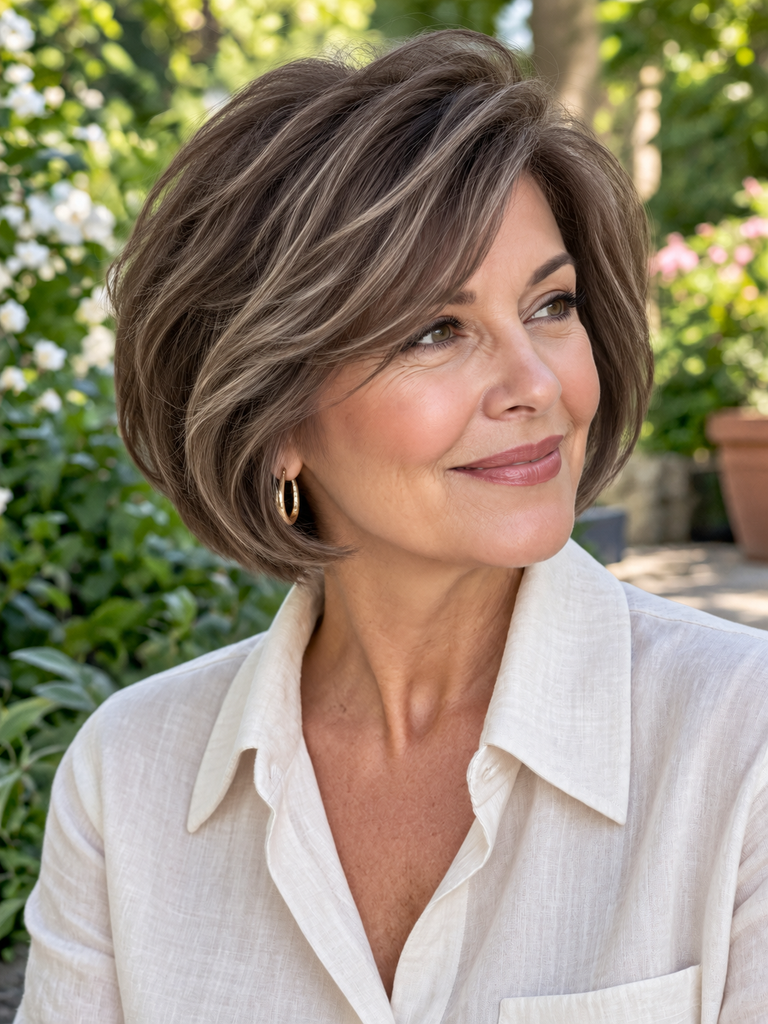
A classic Italian bob looks more relaxed with subtle texture through the surface. Keep the length around the chin or slightly below, with a substantial perimeter and minimal internal layering. Gentle movement around the sides prevents the silhouette from appearing overly structured. Apply lightweight styling cream before creating loose bends through selected sections. Finish by separating the ends with your fingers, keeping the overall shape full while introducing an effortless touch.
Textured Italian Bob With Side Bangs
Long side bangs add movement without competing with the bob’s fuller shape. Let the fringe sweep from the eyebrow toward the cheekbone, gradually connecting into lightly textured front sections. Keep the back relatively full with only subtle internal layering. A deep side part enhances the directional movement beautifully. Blow-dry the bangs diagonally, then loosen the ends with your fingertips so the style feels relaxed instead of overly polished.
Wavy Textured Italian Bob
Loose waves give the Italian bob an easy, lived-in personality. Maintain a dense perimeter around the chin while introducing gentle internal layers for movement. Instead of creating identical curls, alternate soft bends throughout the sides and back. A lightweight texture spray can enhance separation without making the hair crunchy. Leave the ends slightly straighter in selected sections, helping the finished bob look naturally tousled while preserving its signature substantial shape.
Silver Textured Italian Bob
Natural silver shades become more dimensional when paired with subtle movement. Keep this Italian bob around chin length with a full perimeter, softly textured surface layers, and gentle cheekbone-framing pieces. Slightly deeper silver underneath can add extra visual depth. Use lightweight styling cream to create soft separation through the ends. A relaxed side part completes the look, allowing different silver tones to become visible whenever the textured sections move.
Textured Italian Bob With Curtain Bangs
Curtain bangs introduce softness around the front while maintaining the Italian bob’s distinctive fullness. Keep the fringe around eyebrow length in the center, gradually extending toward the cheekbones. Subtle surface layers help connect those pieces into the sides. The back should remain relatively dense and softly rounded. Blow-dry the fringe away from the center, then add gentle bends through the bob for a cohesive finish with plenty of natural movement.
Tousled Italian Bob
Intentional imperfection gives this Italian bob its character. Preserve a strong chin-length perimeter while adding carefully placed internal texture through the crown and sides. Work a small amount of lightweight mousse through damp hair before blow-drying loosely with your fingers. Add irregular bends only where extra movement is needed. Avoid smoothing every section into place. Slightly separated ends and an undone side part help create that relaxed, casually sophisticated finish.
Grey-Blended Textured Italian Bob
Grey blending can highlight the movement within a textured bob beautifully. Combine natural silver strands with deeper brunette or cool grey sections, keeping the tonal transitions soft. A full chin-to-neck-length perimeter maintains the Italian-inspired silhouette. Light internal layers provide enough movement to reveal different shades without thinning the ends excessively. Style with loose bends and a touch of texturizing cream, allowing the dimensional color to appear naturally throughout the hairstyle.
Curly Textured Italian Bob
Curls bring generous movement to the Italian bob while preserving its recognizable rounded shape. Keep enough length around the chin and lower sides for curls to form without becoming overly cropped. Gentle layering can distribute the texture while maintaining fullness toward the perimeter. Apply curl cream to damp hair and scrunch softly. Diffuse on low airflow or allow it to air-dry, then separate only a few curls for a naturally dimensional finish.
Textured Italian Bob With Wispy Bangs
Light wispy bangs create an airy contrast against the substantial bob shape. Keep the fringe softly separated rather than cutting a dense straight line across the forehead. Subtle face-framing pieces can connect those bangs into the fuller sides. Preserve weight through the back and perimeter for that characteristic Italian bob finish. Use a small amount of texture spray around the fringe and ends, encouraging movement without disturbing the haircut’s polished foundation.
Textured Italian Bob With Deep Side Part
Changing the part can dramatically alter a simple Italian bob. A deep side part creates natural lift and directs more volume toward one side, making textured layers appear more noticeable. Keep the length around the jaw or slightly below with a dense, softly rounded perimeter. Add irregular bends through the heavier side for movement. Finish with flexible styling spray, allowing the lifted crown and sweeping front section to remain touchable.
Layered Textured Italian Bob
Strategic layering introduces movement while keeping the Italian bob recognizable. Concentrate lightweight layers through the interior and upper surface rather than heavily thinning the perimeter. Longer cheekbone-framing pieces can add extra softness around the front. Style the layers with relaxed outward and inward bends for an intentionally varied finish. A lightweight styling cream helps define individual sections, while the substantial lower edge maintains the cut’s signature full-bodied appearance.
Textured Italian Bob With Flipped Ends
Flipped ends give this fuller bob a playful retro influence. Keep the haircut around chin-to-neck length with subtle internal layers and a strong lower edge. Rather than flipping every section uniformly, turn selected ends outward while leaving others softly curved. This creates a more contemporary textured effect. Use a round brush during blow-drying, then loosen the shape with your fingers. Flexible hairspray helps maintain movement without creating a rigid finish.
Soft Shaggy Italian Bob
A restrained shag influence makes the Italian bob feel lighter without sacrificing its dense foundation. Add airy crown and surface layers while maintaining enough weight around the lower perimeter. Feathered cheekbone-framing pieces create additional movement around the front. Keep the shaggy effect subtle rather than heavily razored. Finish with texture spray and gently tousle the crown using your fingertips. The resulting silhouette combines controlled fullness with an intentionally relaxed surface.
Textured Italian Bob With Face-Framing Layers
Face-framing layers can transform the front of an otherwise classic Italian bob. Begin around the cheekbones and blend the pieces gradually toward the fuller chin-length perimeter. Keep layering elsewhere minimal so the overall silhouette remains substantial. Create soft bends through the front sections, directing them slightly away from the face. A center or relaxed side part works equally well, depending on how much movement you want around the crown.
Voluminous Textured Italian Bob
Root lift and a substantial perimeter give this version its bold silhouette. Keep the bob slightly below the chin, with restrained internal layers that encourage movement without removing too much weight. Blow-dry the crown with a round brush for controlled volume, then create loose bends through the sides. Break apart the polished finish gently with your fingers. A flexible styling spray keeps the volume intact while preserving the soft, touchable texture.
