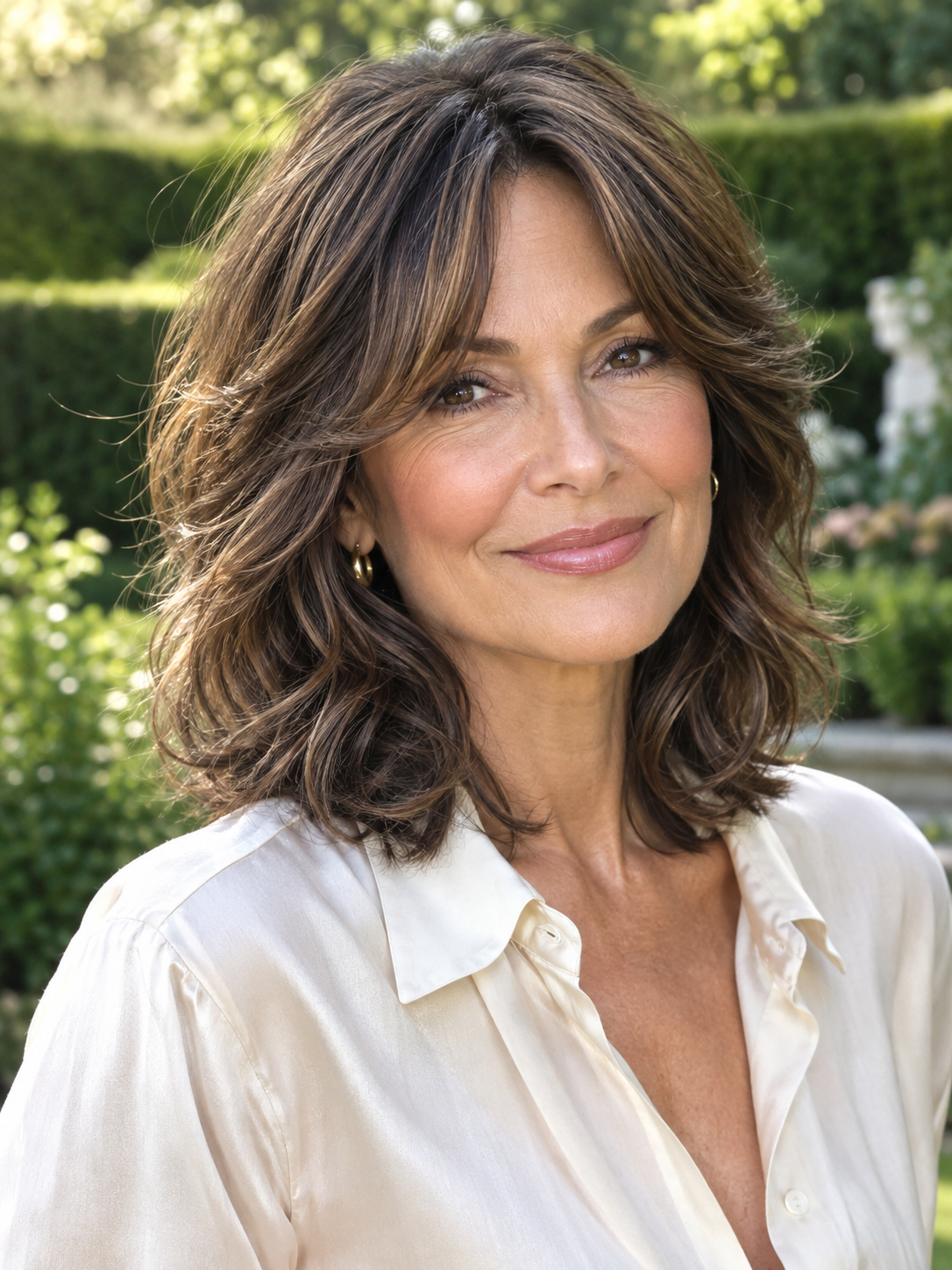
The trick with a Chic Shags or wolf cut is knowing where the texture should stop. Too much layering can make the shape feel messy instead of intentional, while carefully placed layers create movement without losing the haircut’s silhouette. Modern versions are also softer than the dramatic cuts that first made wolf styles famous. Shags tend to distribute their texture more evenly, while wolf cuts usually emphasize shorter crown layers and a longer back. These 16 ideas explore both sides, from polished collarbone shags to choppier wolf cuts with plenty of personality.
Soft Curtain-Bang Shag
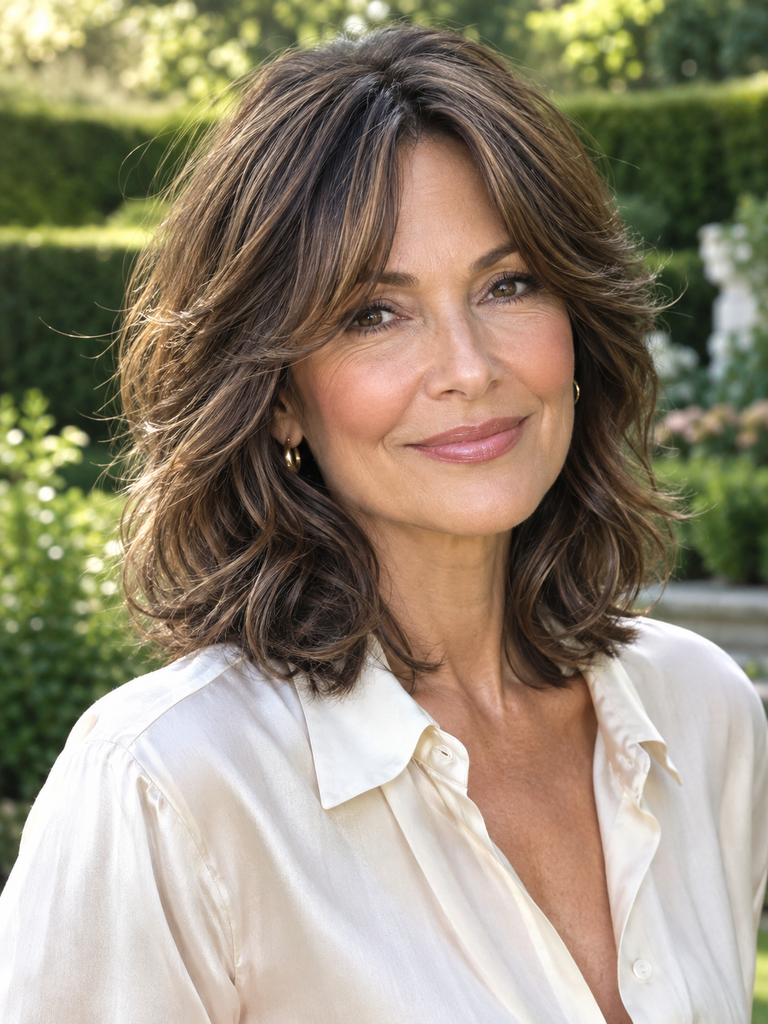
Curtain bangs give this classic shag an especially wearable finish. The fringe parts softly at the center, blending into cheekbone-length face-framing layers. Feathered layers begin around the crown and continue through the collarbone-length sides. Keep the back slightly longer with airy, textured ends rather than a blunt perimeter. A lightweight styling cream helps define the layers without making them stiff. Soft waves bring out the movement while keeping the overall silhouette relaxed.
Collarbone Shag With Feathered Layers
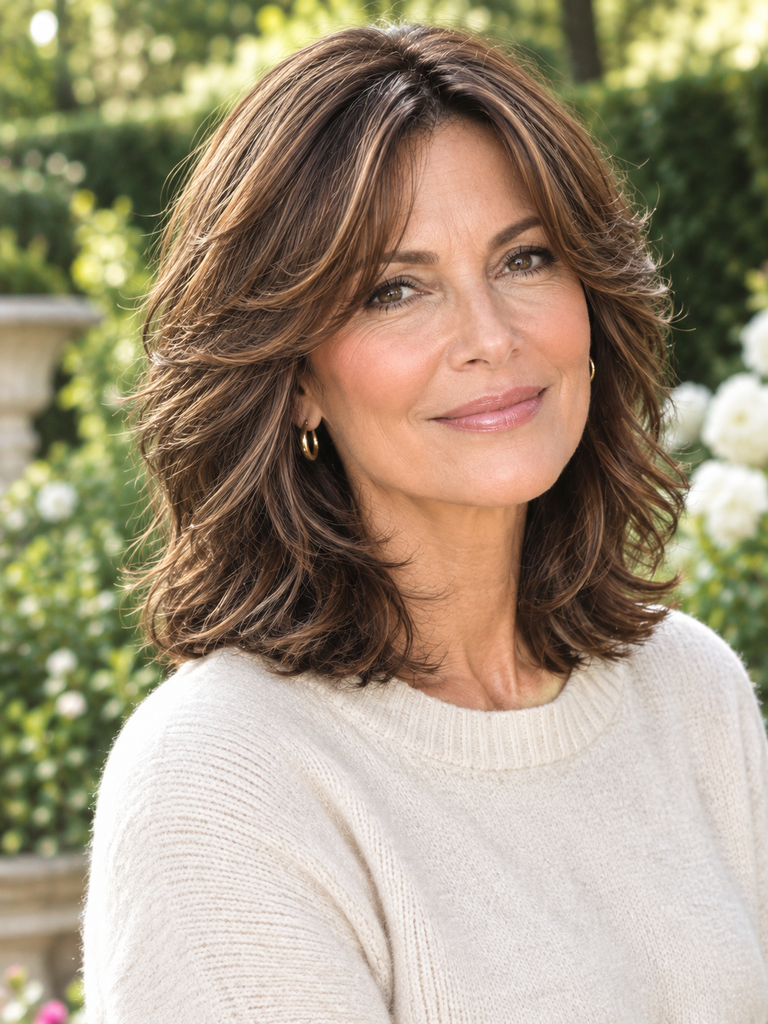
For a softer interpretation, keep the main length around the collarbone. Feathered layers begin near the crown and cascade through the mid-lengths, creating movement without dramatically shortening the perimeter. Face-framing pieces curve from the cheekbones toward the collarbone. The back stays full enough to preserve length, while lightly textured ends prevent a heavy finish. A round brush can add gentle lift before finishing with a flexible texturizing spray.
Textured Wolf Cut With Curtain Fringe
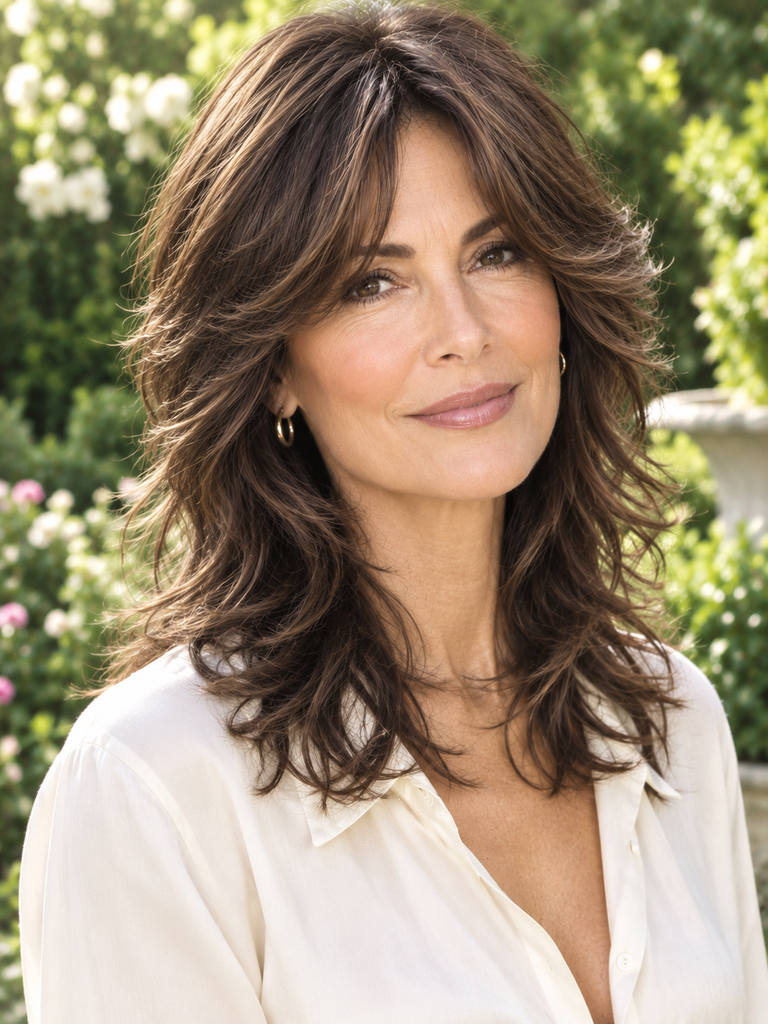
Shorter crown layers give this wolf cut its signature lift. Curtain fringe opens through the center and connects with cheekbone-length side pieces. The mid-lengths stay visibly layered, while the back extends toward the upper chest with feathered, piecey ends. Keep the crown slightly fuller than the lower sections for recognizable wolf-cut contrast. Work a small amount of styling cream through the layers, then let the natural bends create the final texture.
Long Shag With Wispy Bangs
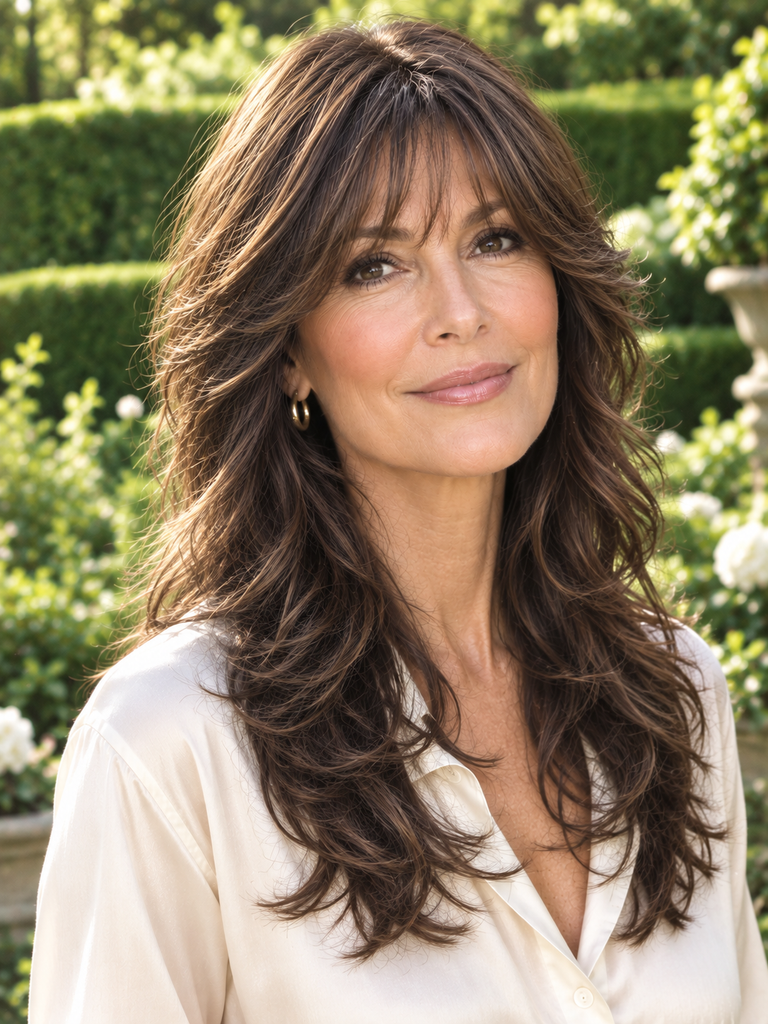
Long hair can still carry a genuine shag shape when the layers are placed carefully. Wispy bangs sit lightly across the forehead and blend into cheekbone-length framing pieces. Surface layers begin around the crown and continue through the chest-length sides. The back remains long but finishes with feathered ends. A lightweight mousse can encourage soft volume without overwhelming the length. Loose bends make the layered structure especially easy to see.
Choppy Mid-Length Wolf Cut
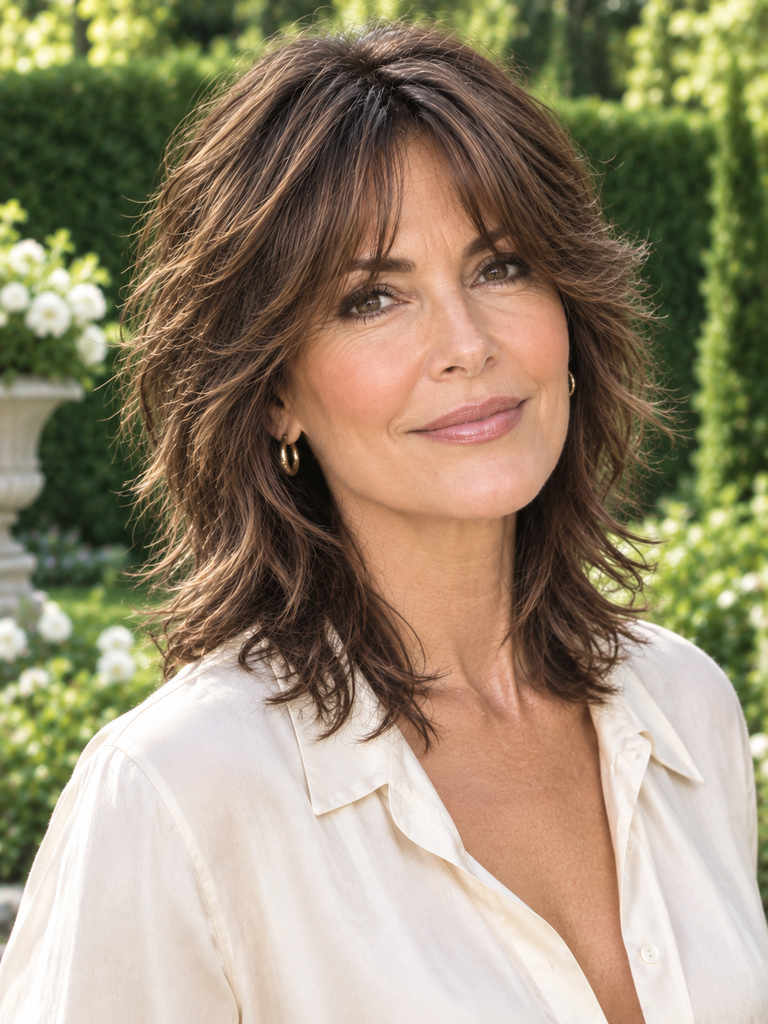
This mid-length wolf cut brings stronger contrast between the crown and back. Choppy layers create lift around the crown, while shorter side pieces frame the cheekbones. The lower sections fall around the collarbone and extend slightly longer through the nape. Textured ends keep the silhouette intentionally undone. Use a texturizing spray before scrunching the layers with your hands. The result feels edgy without becoming an extreme mullet.
Curly Shag With Rounded Layers
Natural curls can give a shag beautiful movement without much styling. Rounded crown layers create shape, while shorter face-framing pieces blend into the jaw and collarbone areas. The back maintains a softly rounded perimeter with textured ends. Avoid excessive layering through the lower sections, especially when curls shrink significantly. A lightweight curl cream can help define individual sections. Diffuse gently or air-dry to preserve the relaxed, touchable texture.
French-Inspired Shag With Side Bangs
A side-swept fringe gives this shag a more refined direction. The bangs begin above one eyebrow and sweep toward the cheekbone, connecting with softly feathered layers. Crown layers stay moderate, while the collarbone-length sides maintain a fuller shape. The back tapers gently through textured ends instead of forming a sharp perimeter. A round brush can shape the fringe, while a light styling cream keeps the remaining layers soft.
Short Shag With Piecey Fringe
Shorter hair makes the shag feel energetic without requiring a dramatic wolf-cut silhouette. A piecey fringe sits across the forehead and breaks into short face-framing sections near the cheekbones. Crown layers create visible lift, while the sides taper toward the jaw. The back finishes just below the nape with feathered ends. Rub a tiny amount of styling paste between your fingers before separating the ends. This helps emphasize the cut’s individual layers.
Soft Wolf Cut With Long Face Framing
If you want wolf-cut texture without a dramatic silhouette, keep the face framing longer. Crown layers remain noticeably shorter, creating lift and separation around the top. Front pieces fall from the cheekbones toward the collarbone, while the back extends to the upper chest. Feathered ends soften the transition between sections. A lightweight mousse can encourage volume at the crown. Finish with your fingers rather than a brush for natural-looking separation.
Wavy Shoulder-Length Shag
Loose waves work beautifully with a shoulder-length shag because the texture naturally separates the layers. Keep the front pieces around the cheekbones before extending them toward the shoulders. Soft crown layers create movement without removing too much weight. The back follows a rounded shoulder-length perimeter with lightly feathered ends. Apply a small amount of wave-enhancing cream while the hair is damp. Scrunch gently, then allow the natural bend to settle.
Shaggy Wolf Cut With Choppy Bangs
Choppy bangs make this version noticeably more expressive. The fringe sits around the brow and breaks into uneven-looking sections that connect with short cheekbone framing. Heavily textured crown layers create the wolf-cut volume, while longer sections extend through the collarbone-length back. The nape remains longer than the sides for subtle mullet influence. A texturizing spray helps separate the layers. Use your fingertips to create irregular movement instead of overly polished waves.
Layered Lob Shag With Curtain Fringe
Start with a collarbone-grazing lob, then add shag-inspired layering through the crown and sides. Curtain fringe opens gently at the center and blends into jaw-length front pieces. The back keeps a relatively full perimeter, while surface layers create movement through the ends. This balance makes the style softer than a traditional wolf cut. Blow-dry with a medium round brush, then loosen the waves with your fingers for an easy finish.
Feathered Long Wolf Cut
Long hair gives the wolf cut room to show its layered contrast. Keep the crown noticeably shorter, with feathered layers beginning around the temples and continuing through the mid-lengths. Face-framing pieces fall from the cheekbones toward the chest. The back remains long but becomes lighter and more textured toward the ends. Use a lightweight volumizing mousse at the roots, then create loose bends through the lower sections with minimal heat.
Bixie-Inspired Shag
This shorter shag borrows the compact shape of a bixie while adding visible texture. Crown layers are short and airy, while longer side pieces reach around the cheekbones and jaw. The back tapers softly toward the nape instead of forming a blunt bob line. A piecey fringe can sit lightly across the forehead or sweep sideways. Work a small amount of styling cream through the ends to highlight the separation between layers.
Tousled Shag With Bottleneck Bangs
Bottleneck bangs narrow through the center before widening toward the temples, making them a natural partner for a tousled shag. The fringe blends into cheekbone-length face framing and softly feathered crown layers. Keep the overall length around the collarbone, with a slightly longer back and textured perimeter. A lightweight mousse can add body without making the style rigid. Finish by separating a few ends with your fingertips for relaxed definition.
Curly Wolf Cut With Face-Framing Layers
A curly wolf cut works best when the layers follow the hair’s natural pattern. Shorter crown sections create lift, while face-framing curls begin around the cheekbones and continue toward the collarbone. The back remains longer through the nape, giving the haircut its recognizable wolf-cut outline. Keep the ends softly textured rather than overly thinned. Apply curl cream to damp hair, then diffuse gently to encourage definition without flattening the layered shape.
