
Baby bangs work best when they look deliberately short, not accidentally over-trimmed. That distinction usually comes from pairing the fringe with a haircut that supports its proportions. A crisp bob makes tiny bangs feel graphic, while a shag gives them a softer, less precise personality. Texture matters just as much. Curly, wispy, blunt, and choppy versions can create completely different results despite sharing the same cropped length. These baby bangs hairstyles show how versatile short fringe can become when the surrounding shape, texture, and styling work together.
Baby Bangs With a French Bob

A French bob becomes noticeably edgier when paired with tiny bangs. Keep the bob around jaw length with a softly structured perimeter. Short fringe exposes more forehead while emphasizing the compact haircut shape. Slight texture through the ends prevents everything from appearing overly precise. Work a small amount of texture cream through dry hair. The finished combination balances Parisian-inspired polish with a playful contemporary attitude.
Choppy Baby Bangs

Choppy baby bangs feature deliberately uneven ends for relaxed definition. Their broken cutting line makes the fringe feel softer and less severe. Continue that texture through a layered bob or shoulder-length haircut. A tiny amount of styling paste can separate individual fringe pieces. Avoid smoothing everything perfectly because movement gives this style character. The result feels edgy without requiring an extremely sharp geometric finish.
Curly Baby Bangs

Natural curls give baby bangs a completely different personality. Short curls can sit loosely across the upper forehead while maintaining bounce. Continue the rounded texture through shoulder-length curls for visual balance. Apply curl cream lightly before allowing the fringe to form naturally. Your stylist should consider shrinkage carefully when choosing the finished length. Keeping individual curls defined creates softness while preserving the intentionally cropped fringe.
Baby Bangs With Long Layers

Long hair creates striking contrast against a deliberately short fringe. Keep the lengths flowing with gradual layering rather than excessive texture. Face-framing pieces can connect the tiny bangs with the longer haircut more naturally. A smooth blowout emphasizes the difference between cropped fringe and cascading lengths. For softer styling, add broad bends through the ends. This combination lets you make a noticeable change while preserving most of your overall length.
Wispy Baby Bangs

Light separation makes tiny bangs much easier to wear softly. Instead of creating a dense horizontal line, wispy baby bangs reveal small spaces between individual pieces. Pair them with a bob, lob, or medium layered haircut. Blow dry the fringe downward using minimal tension, then separate the ends with your fingertips. Avoid heavy oils around the bangs. Lightweight styling keeps their airy texture visible and prevents the short pieces from clumping together.
Blunt Baby Bangs
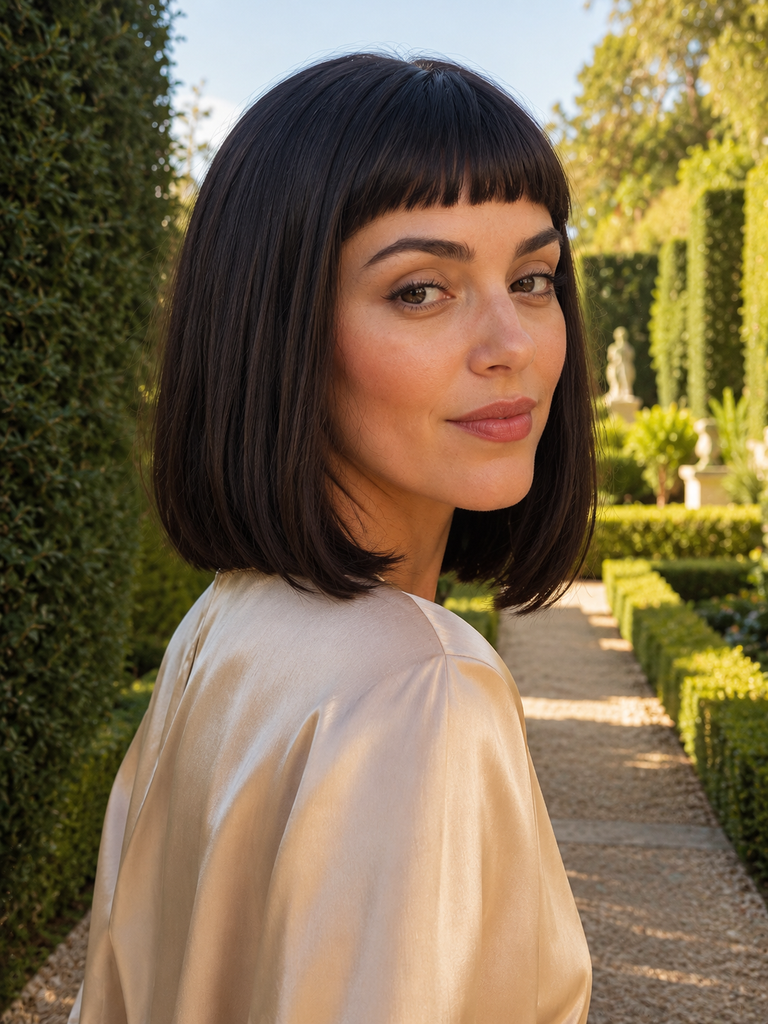
For maximum definition, keep baby bangs dense and precisely shaped. A straight cutting line emphasizes their intentionally short length and creates graphic contrast against smooth hair. Pair them with a blunt bob or sleek shoulder-length cut for a cohesive silhouette. Blow dry the fringe downward before styling the remaining hair. Use smoothing cream sparingly through the ends. This version requires frequent trims because even modest growth noticeably changes the crisp proportions.
Baby Bangs With a Textured Bob

Texture keeps short bangs from making a bob appear overly rigid. Choose a chin-length shape with subtle internal layers and lightly piecey ends. The baby fringe can remain relatively straight while the bob carries relaxed bends throughout. Work texture spray through the lower lengths rather than directly onto the bangs. This approach preserves separation around the fringe while creating movement elsewhere. The combination feels contemporary without relying on dramatic layering.
Baby Bangs With a Pixie Cut
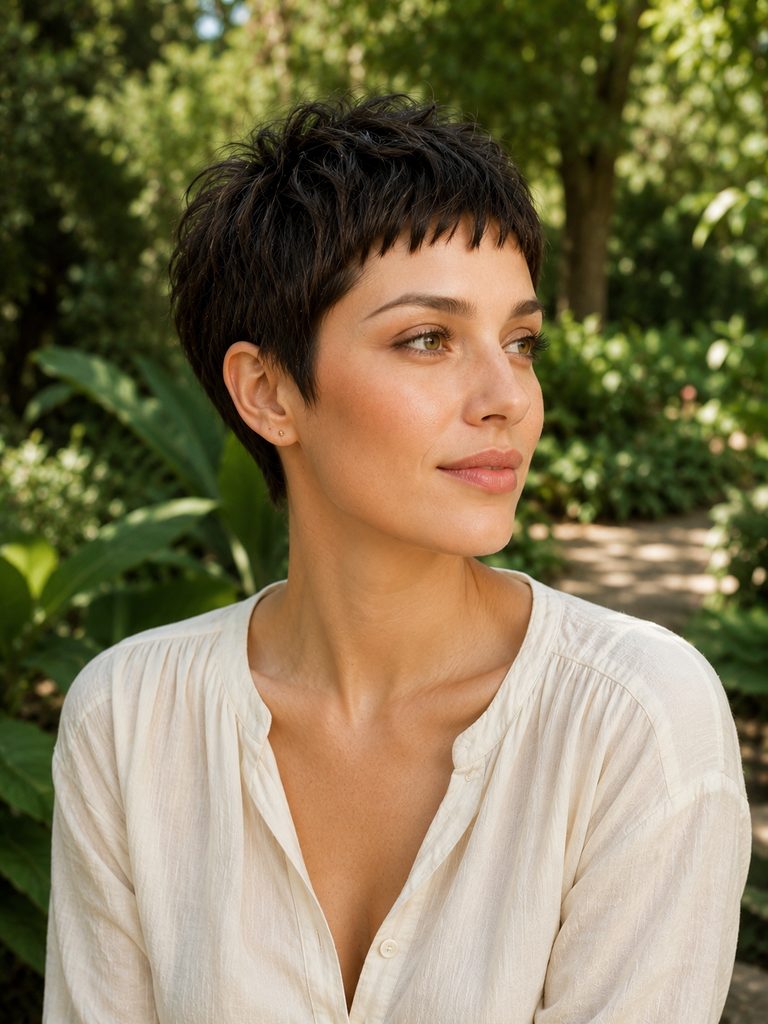
A pixie naturally complements baby bangs because both features share cropped proportions. Keep some length through the crown so the haircut retains styling flexibility. The fringe can sit straight across or separate into tiny textured pieces. Tapered sides and a neat back provide contrast against the longer top. Use lightweight styling paste for controlled definition. You can direct the crown forward for cohesion or add gentle lift for more dimension.
Shag With Baby Bangs

Shaggy layers give baby bangs an intentionally undone quality. Keep the fringe short and slightly irregular, then continue textured layering around the crown and lengths. Natural waves make this combination especially easy to style. Apply lightweight mousse before air drying or diffusing, then separate selected pieces once dry. Avoid creating a perfectly smooth finish. The shag works best when the cropped fringe feels connected to the movement throughout the remaining haircut.
Baby Bangs With a Sleek Lob

A smooth long bob creates sophisticated contrast with dramatically short bangs. Keep the lob near the collarbone with a relatively clean perimeter and minimal layering. Straight styling emphasizes both the cropped fringe and longer silhouette. Apply heat protectant before smoothing the lengths, then finish with lightweight shine serum. Keep the fringe slightly softer than the rest of the haircut. That subtle difference prevents the combination from becoming excessively geometric.
Wavy Bob With Baby Bangs
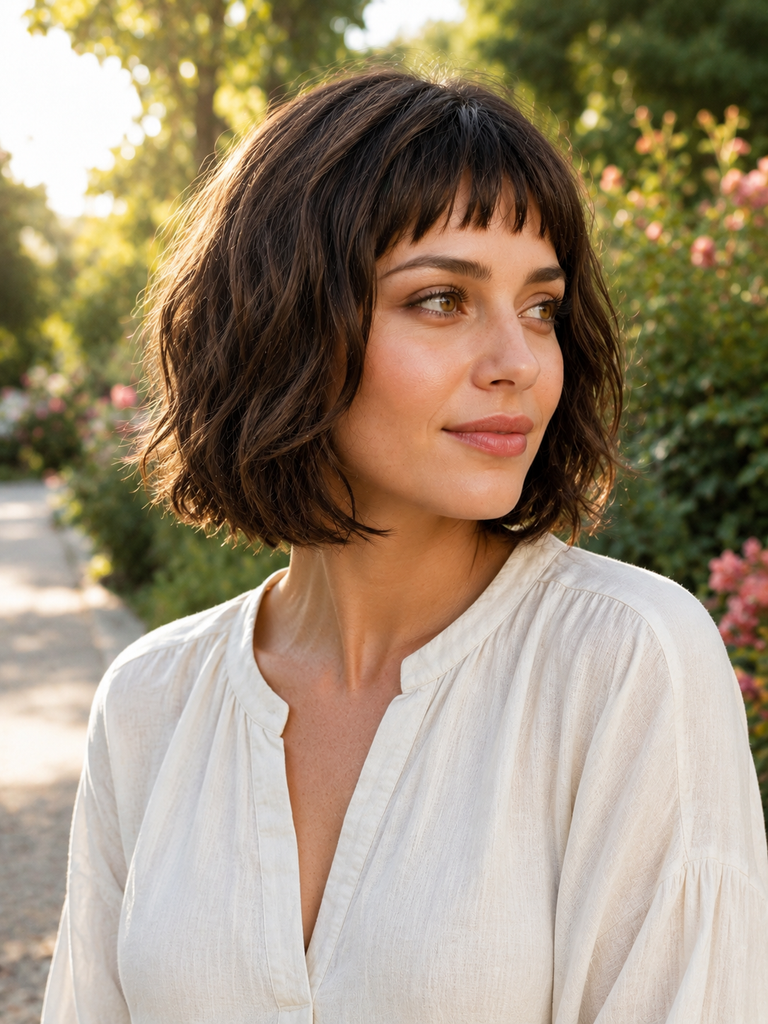
Loose waves bring softness to the strong horizontal effect of baby bangs. Start with a chin-to-shoulder-length bob containing subtle internal layers for movement. Keep the fringe relatively simple so it does not compete with the textured lengths. Create broad bends rather than tightly defined curls. A lightweight texture spray can separate the waves afterward. This balance between short structured fringe and relaxed movement makes baby bangs feel surprisingly approachable.
Baby Bangs With a Modern Shag

More structured than a heavily tousled shag, this version combines cropped bangs with controlled layers. Keep shorter sections around the crown and gradually extend them toward shoulder length. Slightly separated baby bangs reinforce the textured shape without overwhelming it. Blow dry using your fingers to encourage natural movement. Add texture cream selectively through the ends afterward. The result combines shag-inspired personality with enough structure for an intentionally styled everyday finish.
Micro Baby Bangs With a Blunt Bob

Go especially short when you want the fringe to become the statement. Micro baby bangs sit high above the eyebrows, creating dramatic contrast with a clean blunt bob. Keep the bob around jaw length so its strong perimeter supports the graphic fringe. Smooth styling highlights the haircut’s precise geometry. A small flat brush helps control the bangs during drying. Regular trims are essential if you want those deliberately compact proportions to remain consistent.
Feathered Baby Bangs

Feathering removes some visual heaviness from very short fringe. Rather than maintaining one dense cutting line, lightly textured ends create softer separation. Pair the fringe with feathered shoulder-length layers for continuity throughout the haircut. Direct the surrounding pieces away from the face during blow drying. Keep the baby bangs mostly forward with subtle movement through their tips. Lightweight styling cream can define the feathering without making those short sections appear stiff.
Baby Bangs With a High Ponytail

Pulling longer hair upward makes tiny bangs an immediate focal point. Keep the fringe softly textured while gathering the remaining hair into a high ponytail. Gentle crown smoothness creates contrast against the short separated bangs. Add broad waves through the ponytail if you want more movement. Use lightweight smoothing product around the sides rather than across the fringe. This styling option works especially well when you already have long hair with baby bangs.
Retro Baby Bangs With Soft Waves
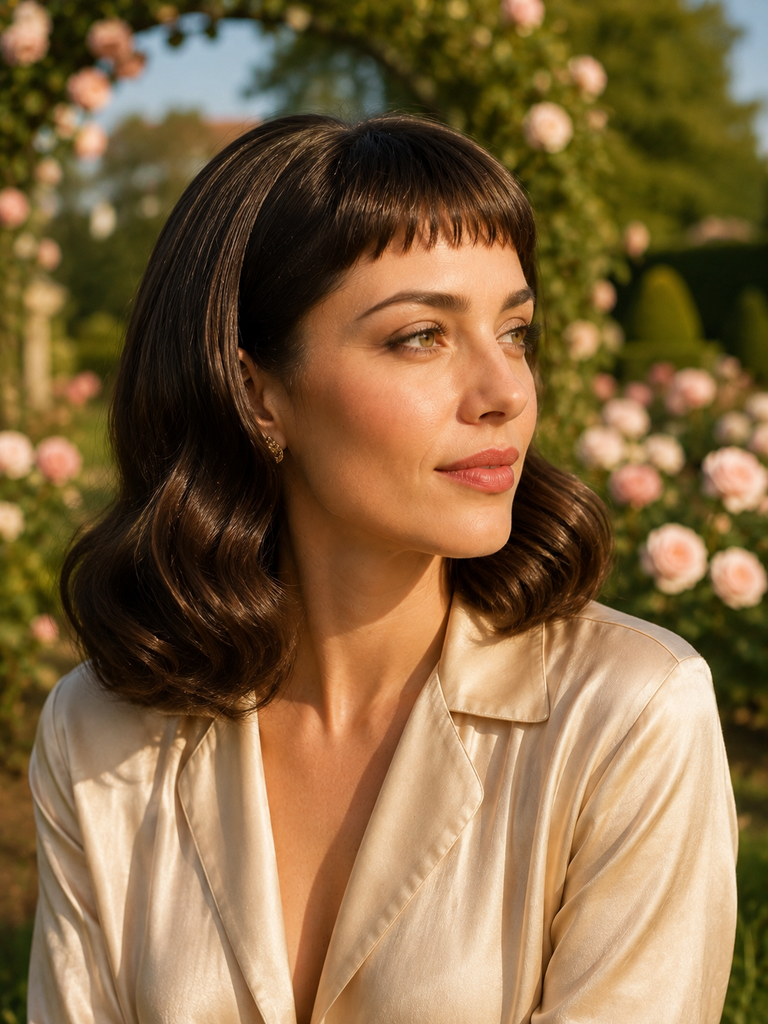
A gently curved baby fringe can bring vintage character to shoulder-length waves. Instead of keeping the bangs completely flat, encourage a subtle rounded shape during blow drying. Style the remaining hair into broad, polished waves with smooth ends. A side or centered direction can change the overall mood. Finish with flexible hold spray rather than stiff product. The combination references retro styling while remaining wearable through its softer texture and controlled movement.
