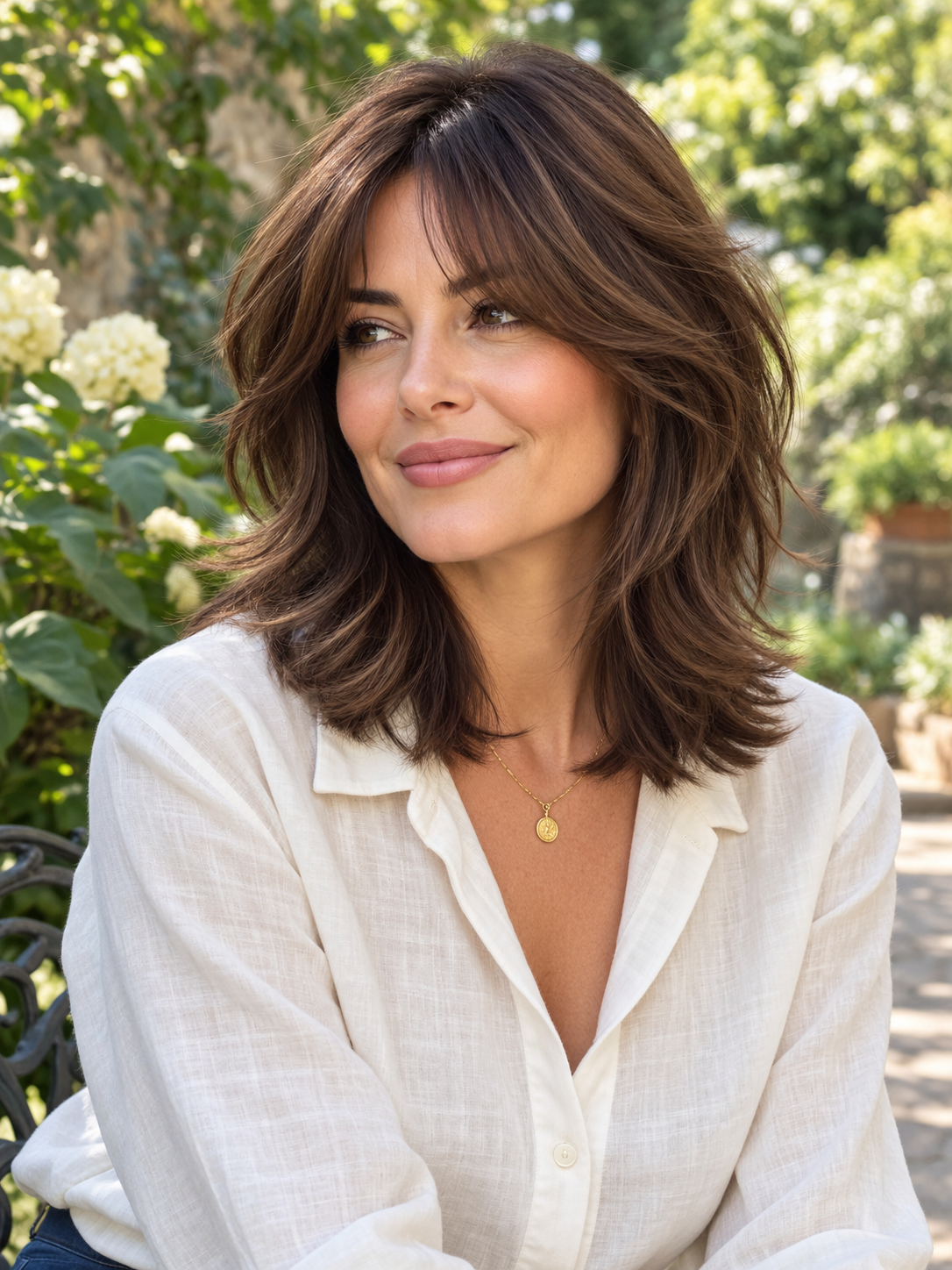
The best soft shags with curtain fringe do not need aggressively chopped layers. In fact, leaving some weight through the ends often makes the haircut easier to style. Curtain fringe supplies the recognizable movement around the front, while blended layers create softness through the crown and lengths. The combination can work on short, medium, or long hair without becoming overly retro. These variations range from airy and understated to wavy, curly, and deliberately tousled, giving you plenty of ways to adapt the shape.
Classic Soft Shag With Curtain Fringe
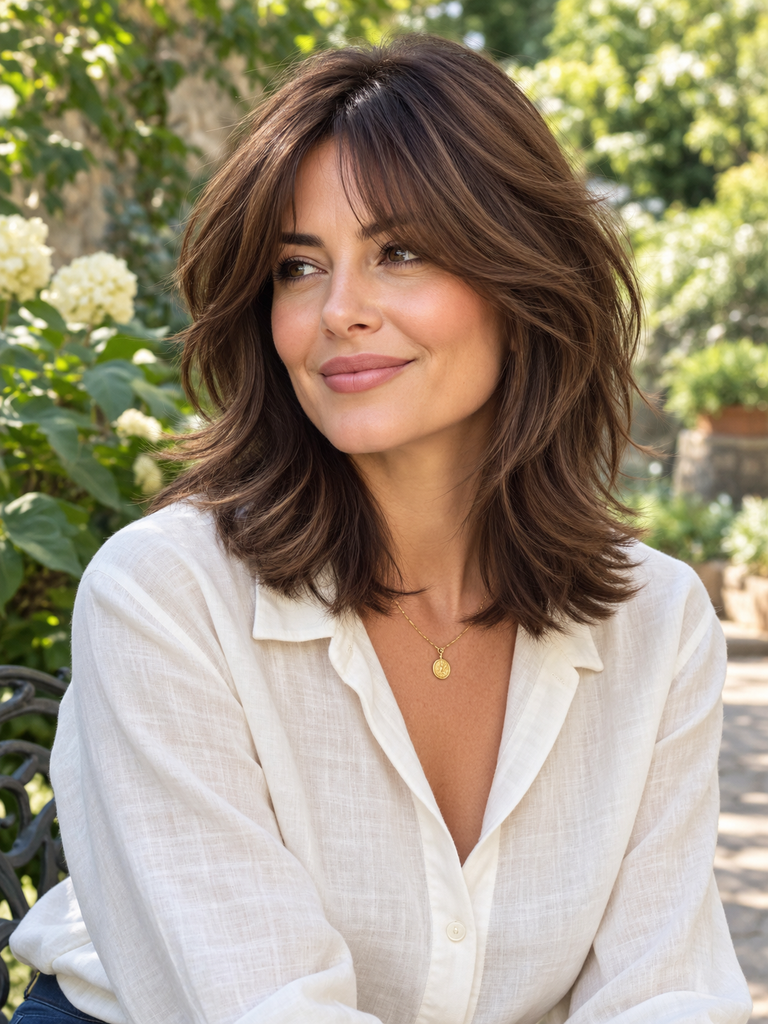
Keep the layering blended rather than heavily disconnected for this classic version. Crown layers create gentle lift, while longer sections maintain fullness through the lower shape. Curtain fringe opens around the center and gradually blends into cheekbone-length pieces. Blow-dry the fringe away from the face using a round brush. Finish the remaining layers with styling cream, encouraging natural separation without creating an overly piecey or heavily textured result.
Shoulder-Length Soft Shag With Curtain Fringe
Shoulder length gives shag layering enough room to create visible movement. Keep shorter layers around the crown and cheekbones, then gradually extend them toward the shoulders. Curtain fringe can skim the eyebrows before opening toward longer side pieces. Work lightweight mousse through damp hair before drying. Gently turn the front layers outward with a round brush, while allowing the back to retain a softer, less structured finish.
Wavy Soft Shag With Curtain Bangs
Loose waves naturally emphasize the different lengths within a soft shag. Keep crown layers airy, with longer sections flowing toward the shoulders. The curtain bangs should separate near the center and merge gradually into the wavy front pieces. Apply wave-enhancing mousse before air-drying or diffusing. Refine several sections around the front afterward, keeping the bends irregular so the hairstyle maintains its easy, naturally textured character.
Long Soft Shag With Curtain Fringe
Longer hair can carry shag layers without sacrificing its flowing silhouette. Begin shorter sections around the crown and cheekbones, then blend gradually into longer lengths. A curtain fringe creates movement across the forehead while connecting naturally with those front layers. Apply lightweight styling cream through damp lengths before blow-drying. Use a large round brush around the front, creating broad outward curves instead of tightly curled or heavily feathered sections.
Soft Shag With Wispy Curtain Fringe
A lighter fringe makes the shag feel particularly airy. Keep the curtain bangs wispy around the eyebrows, with longer outer sections reaching toward the cheekbones. Soft surface layers can continue that movement through the sides without removing excessive weight underneath. Direct the fringe away from the center while blow-drying. Use flexible hairspray sparingly afterward, concentrating near the front so the delicate separation remains visible without becoming stiff.
Curly Soft Shag With Curtain Fringe
Curly texture gives soft shag layering plenty of natural dimension. Place shorter curls around the crown for lift, then gradually increase length through the sides and back. Curtain fringe should follow the natural curl pattern, separating loosely around the center. Work curl cream through damp hair and diffuse with minimal disturbance. Avoid straightening the fringe separately, since keeping its curl pattern consistent creates a more cohesive shape throughout the haircut.
Collarbone Soft Shag With Curtain Bangs
A collarbone shag offers movement while remaining easy to manage. Keep the perimeter substantial, then introduce soft crown and surface layers for separation. Curtain bangs can begin around eyebrow length and flow into cheekbone-level pieces. Blow-dry the front away from the face, then add gentle bends through selected layers. A lightweight texturizing spray provides definition, but concentrate it through the mid-lengths rather than saturating the ends.
Soft Shag With Long Curtain Fringe
Long curtain fringe creates a subtle version of the trend. Instead of eyebrow-length bangs, begin the shortest sections closer to the cheekbones. Let them sweep outward before blending into the surrounding shag layers. This works particularly well when you want face framing without maintaining shorter bangs. Add volumizing foam near the roots, then blow-dry the front backward with a round brush. Let the remaining layers fall with relaxed movement.
Tousled Soft Shag With Curtain Fringe
Controlled tousling brings out the shag’s layered structure without creating harsh separation. Keep crown layers shorter for movement, with gradually longer sections around the sides and back. Curtain fringe provides a softer frame around the front. Apply texturizing mousse before drying, then create loose bends through random sections. Break them apart gently with your fingers afterward. Avoid excessive teasing, since the layered construction already provides plenty of natural dimension.
Soft Shaggy Lob With Curtain Fringe
Combining a long bob with shag layering creates a fuller, more compact silhouette. Keep the length around the collarbones, with soft crown layers and lightly textured ends. Curtain fringe should open through the center before blending into cheekbone-framing sections. Blow-dry with a medium round brush to create lift without excessive volume. Finish by gently separating the ends with styling cream, keeping the overall shape relaxed while preserving the lob perimeter.
Straight Soft Shag With Curtain Fringe
Straight styling makes subtle layer placement particularly noticeable. Keep the shortest layers around the crown and front, then blend them smoothly into longer sections below. Curtain fringe introduces movement without requiring waves throughout the haircut. Blow-dry using a paddle brush, then shape only the fringe and front layers with a round brush. A small amount of smoothing serum through the ends helps control flyaways while maintaining light, natural movement.
Soft Shag With Flipped Curtain Fringe
Turn the curtain fringe outward for a slightly more expressive finish. Keep eyebrow-to-cheekbone bangs parted near the center, then connect them into soft layers through the sides. Crown layering provides gentle volume while longer back sections maintain balance. Use a round brush to direct each half of the fringe backward during drying. Repeat that movement on several front layers, creating coordinated flips without turning the entire hairstyle into a dramatic feathered look.
Voluminous Soft Shag With Curtain Bangs
Start with root lift when you want a fuller shag silhouette. Soft crown layers encourage volume, while longer side and back sections prevent the haircut from becoming overly rounded. Curtain bangs open naturally across the forehead and connect with sweeping front layers. Apply volumizing mousse around the roots before blow-drying. Lift crown sections with a round brush, then shape the fringe outward. Flexible hairspray helps preserve volume without restricting movement.
Soft Shag With Face-Framing Layers and Curtain Fringe
Face-framing layers make the transition from curtain fringe especially seamless. Begin the bangs around eyebrow level, then gradually extend the outer sections toward the cheekbones and jaw. Continue that progression into soft shag layers around the sides. Keep the back comparatively long for balance. Blow-dry the front sections away from the face using a round brush. Finish with lightweight styling cream to emphasize the cascading layers without creating excessive separation.
Silver Soft Shag With Curtain Fringe
Silver hair can showcase every layer within a softly constructed shag. Keep airy crown sections for lift, then blend them into longer shoulder-length layers. Curtain fringe should separate around the center and transition into cheekbone-framing pieces. Apply a moisturizing styling cream before drying to keep the feathered ends smooth. Occasional purple shampoo can manage unwanted yellow tones when needed, while a soft blowout highlights the dimensional movement of the cut.
